Drivers warned not to drop their guard as heatwave continues into half-term week
-
Drivers urged to prepare as hot weather continues.
-
Plan breaks, pack water and avoid peak heat where possible.
-
“After several days of heatwave conditions, it is important that drivers do not become complacent.” - AA expert patrol
After heatwave conditions were met in parts of the UK over the Bank Holiday weekend, temperatures are expected to remain well above average in many areas into the new working week.
With many families now travelling for half-term days out, short breaks and longer journeys, the AA is warning that hot weather can put added strain on vehicles, passengers and pets - particularly if drivers are caught in congestion or break down somewhere with little shade.
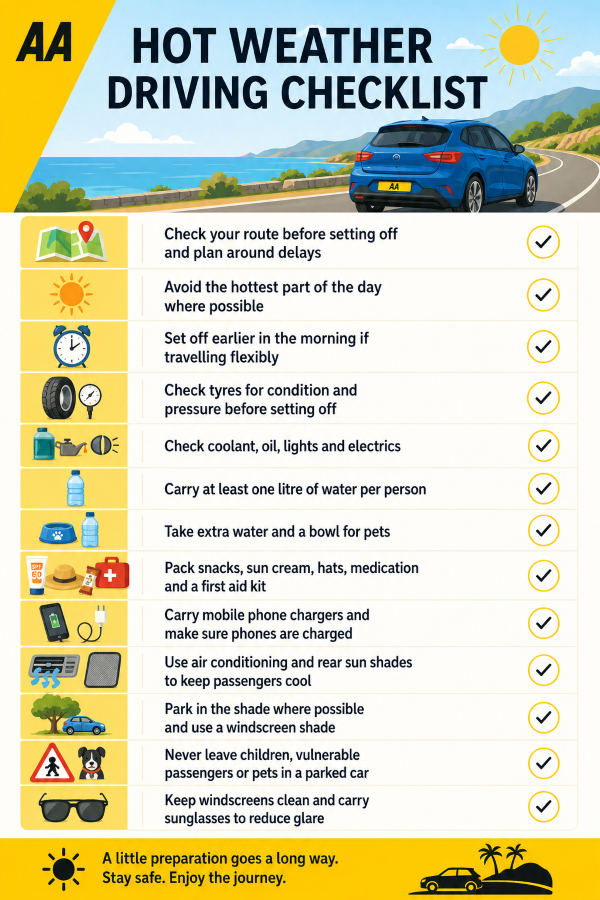
The AA advises drivers to plan regular breaks on longer journeys and aim to stop every two hours or so, especially if they are not used to driving long distances. Motorists should also avoid starting a long journey if they are already tired, as hot weather, heavy traffic and unfamiliar roads can all make driving more demanding.
Drivers who can travel flexibly are being advised to avoid the hottest part of the day, set off earlier in the morning where possible and allow extra time for breaks. Travelling earlier can mean cooler road surfaces, lower air temperatures and less strain on tyres, engines and passengers.
The AA recommends that travellers carry enough water for everyone in the vehicle, ideally at least one litre per person, as well as extra water and a bowl for pets. Staying hydrated can help keep passengers comfortable during the journey and is especially important if a breakdown or long delay occurs.
“Hot weather can be tough on vehicles and uncomfortable for passengers, especially during half-term when families may be travelling further, spending longer in traffic or heading to unfamiliar places.”
Hot cars and vehicle checks
Hot weather can also quickly make parked vehicles dangerous. On a sunny 27°C day, the inside of a car can reach around 60°C, so drivers should never leave children, vulnerable passengers or pets inside a parked vehicle, even for a short time. The AA also reminds drivers to keep their keys with them when loading children or pets into the car, as accidental lock-ins can happen.
Vehicles can suffer in the heat too. Damaged or incorrectly inflated tyres are more vulnerable in higher temperatures, increasing the risk of a blowout. Drivers should check tyre condition and pressures before setting off, and check pressures when tyres are cold.
Cooling systems can also come under more strain in hot weather, making it important to check coolant levels regularly to avoid overheating. More summer driving advice is available on the AA website.
Older cars, especially those without air conditioning or recent servicing, may be more vulnerable during periods of extreme heat. Overheated engines are one of the most likely causes of roadside breakdowns in very hot weather, and radiator cooling fans are more likely to seize on older vehicles.
Lee Morley, AA expert patrol, said: “After several days of heatwave conditions, it is important that drivers do not become complacent. Hot weather can be tough on vehicles and uncomfortable for passengers, especially during half-term when families may be travelling further, spending longer in traffic or heading to unfamiliar places.
“Anyone who can travel flexibly should consider avoiding the hottest part of the day and setting off earlier in the morning, when air temperatures and road surfaces are cooler. Before leaving, take a few minutes to check your tyres, coolant and oil, and make sure you have enough fuel or charge to keep your air conditioning running if traffic is heavy.
“Carry plenty of water – ideally at least one litre per person travelling – and pack as though you could be delayed. Snacks, sun cream, medication, a first aid kit, mobile phone chargers, the AA app and what3words can all make a real difference if you break down or get caught in long queues.
“A parked car can become dangerously hot in minutes, so never leave children, older or vulnerable passengers, or pets inside a vehicle, even briefly. If you do break down, stop somewhere safe if possible, keep well away from moving traffic and wait in the shade, in a safe place, while help is on the way.”
The AA is also advising drivers to take care with glare from strong sunshine. Keeping the windscreen clean, topping up screenwash, replacing worn or damaged wipers and keeping a clean pair of sunglasses in the car can all help improve visibility.
Drivers can also use the AA Route Planner before setting off to check their route, avoid delays where possible and plan stops.
In heavy traffic, motorists should stay calm, keep a safe distance, remove distractions and allow extra time for their journey. On longer trips, the AA recommends taking short regular breaks rather than pushing on while tired.
AA hot weather driving checklist


Summer driving advice
18 April 2018
Seven summer driving myths
9 August 2017

Can you get sunburn through a car window?
27 April 2016