Drivers want more dashboard information to help avoid overheating breakdowns – AA

-
63% of drivers would prefer both a temperature gauge and an overheating warning light
-
Last week, The AA attended a fifth more overheating callouts than the corresponding week, last year
-
Drivers warned not to ignore warning lights
Almost two-thirds (63%) of drivers would rather have both a traditional engine temperature gauge and an overheating warning light on their dashboard, according to a new AA survey1 of 12,500 drivers.
The survey results suggest motorists still value seeing what's happening under the bonnet as UK summers become increasingly hot. Just 15% would prefer an overheating warning light on its own, while 14% favour a temperature gauge alone.
The findings come as prolonged hot weather places extra strain on engines and cooling systems, particularly during slow-moving holiday traffic where vehicles spend long periods idling. Last week alone, The AA attended a fifth2 (21%) more overheating-related callouts than the corresponding week in 2025.
Early Warning Signs
While modern cars have become increasingly sophisticated, many manufacturers have replaced traditional temperature gauges with warning lights that only illuminate once a problem has developed. The AA says the survey highlights drivers' desire for earlier warning before minor issues become major faults.
Drivers should also take a few moments to familiarise themselves with their dashboard before travelling. Though many modern vehicles don’t display a traditional temperature gauge, most do have coolant level and overheating warning lights.
If either of the lights appears, drivers should pull over safely, switch off the engine and allow it to cool. Continuing to drive can quickly turn a relatively minor fault into major engine damage, while removing the coolant cap from a hot engine can cause serious scalding injuries.
Gauge versus Light
The preference for having both systems was consistent across all age groups. Men were slightly more likely than women to favour the combination (64% compared with 60%), while women were twice as likely to prefer a warning light alone (22% versus 11%).
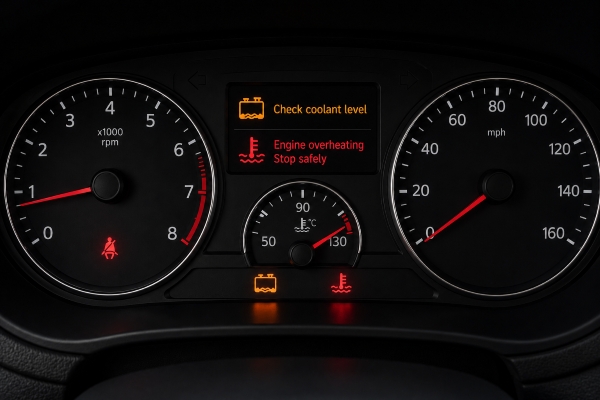
Unlike a temperature gauge, which allows drivers to see engine temperatures gradually rising, an overheating warning light is designed to alert the driver only when immediate action is required.
Overheating is often preventable. Check the coolant level before setting off, never remove the expansion tank cap until the engine is cold, and keep your vehicle regularly serviced. Routine maintenance can identify worn hoses, failing water pumps and deteriorating coolant before they leave you stranded.
Tony Rich, AA Head of Road Safety, said: "Your dashboard is effectively having a conversation with you. Understanding what it's trying to tell you can be the difference between arriving at your destination and waiting for assistance at the roadside.
"Many modern cars only tell you there's a problem once it's already developed, which is why so many drivers still value having both a temperature gauge and an overheating warning light.
"The warning light is there to protect your engine, not to be ignored. If it comes on, find somewhere safe to stop, switch off the engine and allow it to cool. Carrying on regardless can turn a simple repair into major engine damage.
"Before setting off on a long journey, particularly during hot weather, spend a couple of minutes checking your coolant level while the engine is cold and making sure your vehicle is properly maintained. A few simple checks before you travel can often prevent a much bigger problem later."
The AA is encouraging drivers not to be alarmed by hot weather but to pay closer attention to their dashboard and cooling system during summer journeys. Understanding what your vehicle is trying to tell you could help avoid an inconvenient roadside breakdown and an expensive repair bill.
1 Yonder received 12,438 responses from AA members to its online poll between the 14th and 22nd July 2026. Yonder is a member of the British Polling Council and abides by its rules.
2 AA Breakdown statistics
Mobile Mechanics Near Me | Car Service At Home | The AA
A guide for safe summer driving | The AA