The common summer problems leaving motorists stranded – AA

-
The AA sees 20% rise in cooling-system breakdowns during recent heatwaves
-
Flat batteries, tyre trouble, running out of fuel or charge and locked-in keys among common summer problems
-
“Five minutes spent checking your car before setting off could save valuable holiday time at the roadside” – AA head of road safety
Drivers are being urged to carry out a few basic checks to help prevent common summer problems from turning a day out or holiday journey into a roadside breakdown.
During the current series of heatwaves, The AA has attended a fifth (20%) more cooling-system breakdowns compared with the same period last year.
Previous AA analysis also found around one in 10 summer breakdowns attended by patrols were considered self-induced or potentially avoidable. More than a third of these were linked to driver awareness, with flat batteries, misfuelling, lost or locked-in keys and EV charging problems among the issues recorded.
Hot weather can expose existing weaknesses in vehicles, with high temperatures, long journeys, heavy holiday loads and slow-moving traffic putting extra strain on cooling systems, batteries and tyres.
Common summer breakdown problems
One misconception is that flat batteries are mainly a winter problem. High temperatures can accelerate battery deterioration, particularly in older batteries, while increased use of electrical systems can place additional demands on them.
Drivers can also inadvertently flatten a conventional car battery by sitting in a parked vehicle using electrical equipment with the engine switched off.
Tyres are another common summer headache. Warmer road surfaces, heavier vehicle loads and long motorway journeys can expose existing problems, particularly if pressures haven't been checked before setting off. Under-inflated tyres can overheat, wear prematurely and become more susceptible to failure.
Drivers also need to keep an eye on fuel and EV charge levels. AA patrols are regularly called to motorists who have run out of petrol, diesel or electric charge, as well as those stranded following AdBlue or misfuelling problems.
And not every summer callout is mechanical. During the current hot spell, AA patrols have attended more than 3,200 incidents where motorists locked their keys inside their vehicle or boot, in addition to callouts for keys being lost, broken or stuck in locks.
Tony Rich, AA head of road safety, said: “Hot weather is great for a day out or summer getaway, but it can be unforgiving if you or your car aren’t prepared.
“Many of the problems our patrols see are avoidable. Drivers can set off without checking coolant or tyre pressures, flatten the battery using electrics with the engine off, run out of fuel or charge, or lock their keys in the car.
“Heat, long journeys, heavy loads and holiday traffic also put extra strain on cooling systems, batteries and tyres, turning small weaknesses into breakdowns.
“At the same time, heat, long journeys, heavy loads and holiday traffic can put extra strain on cooling systems, batteries and tyres, turning an existing weakness into a breakdown.
“Pay attention to warning lights and temperature gauges. If your vehicle is overheating, find somewhere safe to stop rather than pushing on.
“Five minutes spent checking your car before setting off could save valuable holiday time at the roadside.”
Holiday traffic can turn up the heat
Stop-start traffic can make matters worse, particularly when vehicles are heavily loaded or towing. Prolonged congestion in hot weather can generate additional heat in clutch and transmission components, increasing the risk of problems where parts are already worn.
Drivers towing caravans or trailers should also carry out checks before setting off. Long periods in storage can affect tyres, brakes and wheel bearings, while faults with trailer electrics, wiring and connections can bring a holiday journey to an abrupt halt.
When the road gets hot too
It isn't only vehicles that can struggle in extreme heat. During prolonged hot weather, road-surface temperatures can exceed 60C, causing the bitumen in some asphalt surfaces to soften and making vulnerable roads more susceptible to deformation and rutting.
Edmund King, AA president, said: “Drivers shouldn’t be surprised to see gritters out during very hot weather. Prolonged heat can cause some road surfaces to become sticky or uneven.
“If you encounter a softened or damaged surface, slow down, avoid harsh braking or steering and leave extra space from the vehicle in front.”
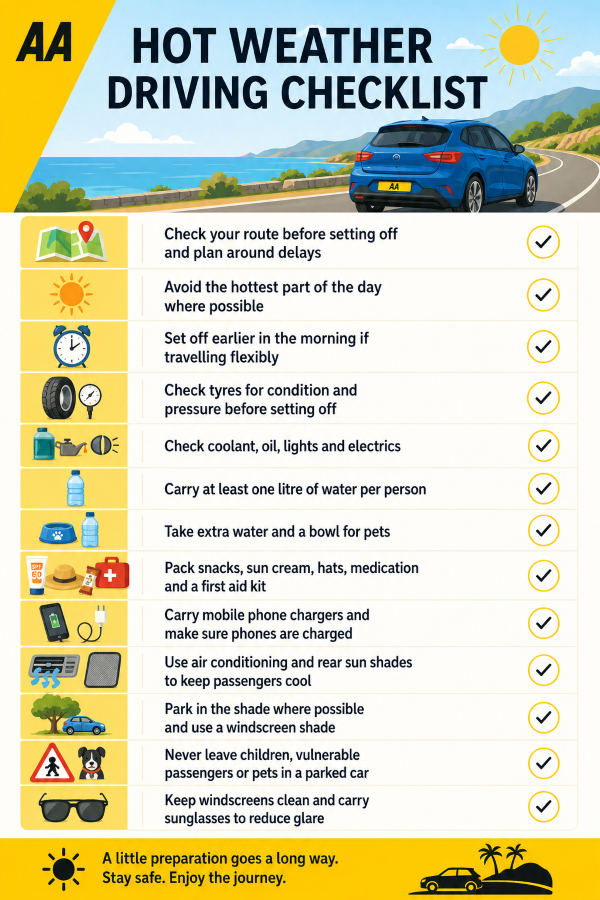
Avoid the hot-weather breakdown trap
The AA is urging drivers to spend five minutes carrying out a FLOWER check before heading off:
- Fuel: Make sure you have enough fuel or EV charge for the journey, allowing for congestion and diversions.
- Lights: Check all lights are working correctly.
- Oil: Check the engine oil level before leaving.
- Water: Check coolant and windscreen washer fluid. Never remove the coolant cap when the engine is hot.
- Electrics: Don't ignore warning lights and consider having the battery checked if there are concerns about its condition.
- Rubber: Check tyre pressures when cold, adjust them for the vehicle's load where required, and inspect tyres for tread and visible damage.
Drivers should also carry drinking water for everyone in the vehicle, including pets, plan regular breaks on longer journeys and check their route before travelling to avoid unnecessary delays.
And before closing the car or boot, make sure you know exactly where the keys are.