AA urges drivers to ‘see and be seen’ as autumn fog rolls in

-
Drivers urged to prepare for reduced visibility as fog develops across parts of England
-
Don’t rely solely on automatic headlights or daytime running lights in fog
-
Slow down and increase the gap to the vehicle ahead
-
Switch fog lights off as soon as visibility improves
-
“Fog can transform a familiar road in a matter of minutes” - Edmund King OBE, AA Charitable Trust
Drivers are being urged to take extra care as fog returns to parts of the country, bringing potentially difficult conditions to roads during the morning commute.
The Met Office is forecasting mist and fog to develop across central and southern England overnight, with morning fog and low cloud expected in places on Thursday. Further night-time fog is possible over the coming days as conditions become generally calmer and more settled.
Fog can significantly reduce visibility and make it much harder for drivers to judge their speed, distance from the vehicle ahead and whether another vehicle is moving or stationary.
How should you drive safely in fog?
The AA is reminding motorists to reduce their speed, increase the distance between themselves and the vehicle ahead and make sure their lights are switched on.
Use dipped headlights and travel at a speed that allows you to stop within the distance you can see to be clear. In fog, the normal two-second gap between vehicles should also be increased to at least three seconds.
Don’t rely solely on automatic headlights, as some systems may not activate in foggy conditions, while daytime running lights can leave the rear of a vehicle unlit.
Be particularly alert for road workers and others working at the roadside, who can be much harder to see when visibility is poor.
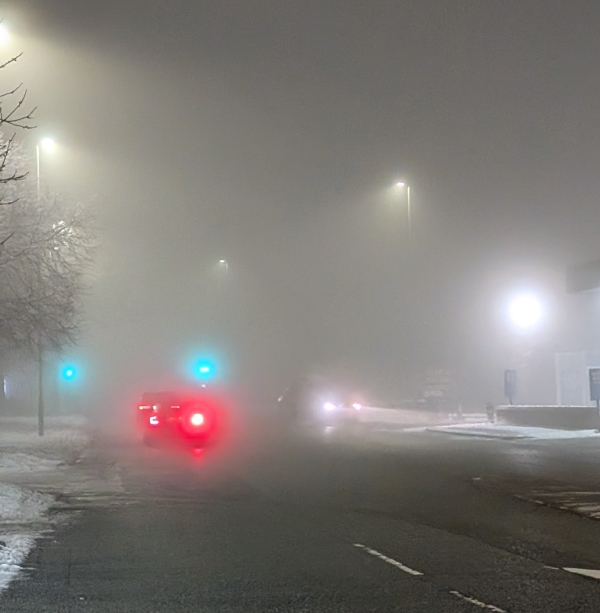
When should you use fog lights?
Fog lights should be used when visibility is seriously reduced. However, it is equally important that drivers remember to switch them off again when conditions improve.
Leaving fog lights switched on when they are no longer needed can dazzle other road users, while bright rear fog lights can make brake lights harder to distinguish.
Fog can also be patchy, so drivers should be prepared to switch fog lights on and off as conditions change during their journey.
Take extra care at junctions in thick fog
Junctions can be particularly challenging when thick fog makes it difficult to see approaching traffic.
Drivers should slow right down, take extra time to look carefully and avoid pulling out until they are confident it is safe.
At a quiet junction in particularly thick fog, winding down a window can also help you listen for approaching vehicles you may not yet be able to see. This should only be used as an additional precaution and never as a substitute for careful observation.
Fog or mist - what's the difference?
While the two terms are often used interchangeably, there is a difference.
The Met Office defines fog as tiny water droplets suspended in the air which reduce visibility to less than 1,000 metres. Mist is less dense, with visibility remaining at 1,000 metres or more.
Whatever the technical definition, drivers should respond to the conditions they encounter rather than waiting for visibility to become particularly poor before adjusting their driving.
Edmund King OBE: ‘Drive to what you can actually see ahead’
Edmund King OBE, Director of the AA Charitable Trust, said: “Fog can transform a familiar road in a matter of minutes, so drivers need to be prepared to adapt their speed and leave more room between themselves and the vehicle ahead.
“One of the biggest mistakes is simply following the rear lights of the car in front. It can give you a false sense of security and means you may be travelling too close to react safely if that vehicle suddenly stops.
“Don’t assume your automatic headlights have switched themselves on either. Take control, use dipped headlights and make sure you can both see and be seen.
“If visibility becomes seriously reduced, use your fog lights, but remember to switch them off again when conditions improve as they can dazzle other road users and obscure brake lights.
“Ultimately, there’s no prize for arriving a few minutes early. Give yourself extra time, slow down and drive to what you can actually see ahead.”
Q&A
When should drivers use fog lights?
Drivers should use fog lights when visibility is seriously reduced. The Highway Code gives a general example of seriously reduced visibility as being when you cannot see for more than 100 metres.
Fog lights are there to help other road users see you in very poor visibility, rather than something which should automatically be switched on whenever there is mist or fog.
Do I have to switch my fog lights off when visibility improves?
Yes.
The Highway Code states that drivers must switch fog lights off when visibility improves.
Front and rear fog lights are extremely bright and can dazzle other road users when they aren't needed. Rear fog lights can also make brake lights more difficult for following drivers to distinguish.
Fog can come and go quickly, particularly on rural roads and in low-lying areas, so drivers should actively manage their lights rather than simply switching their fog lights on at the start of a journey and leaving them on.
Should I use full beam headlights in fog?
Generally, no. Full beam can reflect off the water droplets in fog and make it harder to see. Drivers should use dipped headlights and, when visibility is seriously reduced, fog lights.
Can I rely on my automatic headlights in fog?
No. Drivers should check that their lights are actually switched on.
Automatic headlights generally respond to ambient light levels, and conditions can sometimes be bright enough for the system not to activate despite visibility being reduced by fog.
Daytime running lights should not be relied upon either, particularly as they may not illuminate the rear lights on some vehicles.
How much distance should I leave from the vehicle ahead in fog?
The AA recommends increasing the normal two-second following gap to at least three seconds in fog.
Drivers should also travel at a speed which allows them to stop safely within the distance they can see to be clear.
What should I do at a junction when visibility is very poor?
Slow right down and take extra time to look carefully in both directions before proceeding.
At a quiet junction in particularly thick fog, winding down a window can provide another useful cue by allowing you to listen for approaching traffic which may not yet be visible.
Hearing a vehicle does not tell you precisely where it is or how quickly it is approaching, so listening should only ever supplement, rather than replace, careful visual observation.
What's the difference between fog and mist?
The Met Office defines fog as tiny water droplets suspended in the air which reduce visibility to less than 1,000 metres.
Mist is less dense, with visibility remaining at 1,000 metres or more.
What should drivers do before travelling when fog is forecast?
Drivers should check that all lights are working, clean their windows, mirrors and lights, make sure they know how to operate their fog lights and allow additional time for their journey.
They should also check the latest weather and travel information before setting off.
AA urges drivers to ‘see and be seen’ as autumn fog rolls in

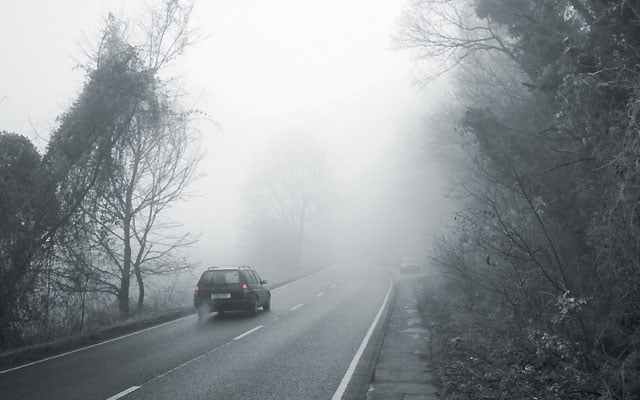
Driving in fog
14 September 2016