This article will be full of toucans, zebras and pelicans, but we promise we haven’t changed our name to The Animal Association.
These are the crossings you’ll encounter when you’re learning to drive, and throughout your life on the road. A safe driver will need to know what each crossing means, and what actions you need to take when you approach one.
Will road crossings affect my driving test?
Yes. In your test, you'll need to know how to act when you drive up to a crossing and what your responsibilities are, so you can make sure everyone around you stays safe.
Here's what you need to do during your driving test for the examiner to give you top marks:
- Maintain your ‘MSM' (mirrors, signal, manoeuvre) as you approach a pedestrian crossing
- Reduce your speed on approach if there are people waiting to cross.
- Don't motion anyone to cross as there could be other cars coming.
- Stop behind the give way or stop line.
- Don't move off until the lights turn to green, unless on a pelican crossing where you can move off if the amber is flashing.
- Don't stop unnecessarily when the amber light is flashing at a pelican crossing and there’s no-one waiting to cross.
Remember that these good driving habits aren't just for your driving test - you'll need to practice them throughout your life to stay a safe driver.
Could I fail my driving test because of pedestrian crossings?
If anything you do is dangerous enough to warrant a major fault, you’ll fail your test. But you might also accrue several minor faults that could cause you to fail.
Things like overtaking on the zigzag lines leading up to the crossing or stopping on the crossing will earn you a fault. Stick to our guidelines above and the examiner shouldn't mark you down.
Zebra crossings
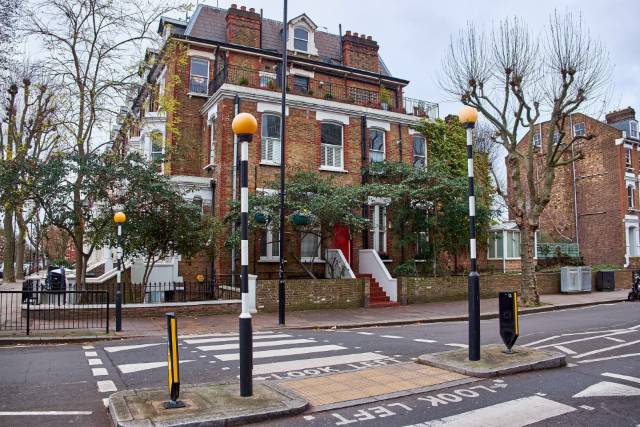
Zebra crossings are easy to spot thanks to the black and white zig-zag road markings on the road and flashing yellow beacons on either side of the crossing.
Do you have to stop at a zebra crossing?
Drivers must give way to pedestrians waiting to cross. Failing to stop for crossing pedestrians is a criminal offence that can result in points on your licence.
Other zebra crossing rules
- Don’t wave someone across – it’s not safe if there’s another vehicle approaching.
- Never overtake on a crossing.
- Don’t park on the zig-zag lines leading up to the crossing. You could block the view of the road for pedestrians as well as prevent other drivers from being able to see people approach.
Pelican crossing
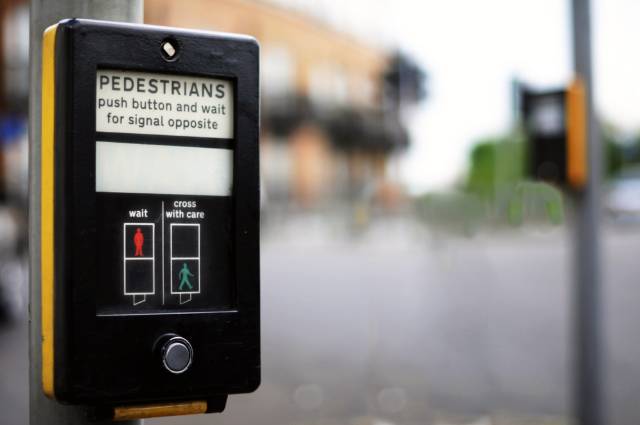
The difference between pelican crossings and zebra crossings is that the flow of traffic is controlled by lights. People waiting to cross at a pelican crossing will press a button that, after a timed delay, changes the traffic lights.
Pedestrians will see a green man illuminate on the opposite side of the road when it's time to cross. The green man starts flashing when it's time to finish crossing.
Drivers must stop if the traffic light is on red. If the traffic light's flashing amber, drivers can continue only if there are no more people on the crossing. If the traffic light's green and the crossing's clear, drivers don't need to stop.
Drivers at pelican crossings must:
- Stop when the light is on red.
- Give way to any pedestrians on the crossing when the amber light is flashing.
- Be prepared to give way to anyone who’s still crossing when the light has changed to green, especially if they’re elderly or disabled.
Puffin crossing
Pelicans and puffins are essentially the same - when it comes to crossings, that is. For the birds? We have no idea.
The main difference between pelican and puffin crossings is that a puffin crossing doesn't have a flashing green man for pedestrians or a flashing amber light for drivers. The traffic lights will only turn green once there are no more pedestrians on the crossing, which is detected by sensors.
Toucan crossing
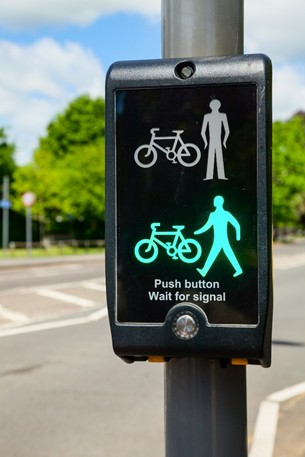
Toucan crossings are made to allow pedestrians and cyclists to cross at the same time – playfully named toucan to explain that the ‘2 can’ cross.
Cyclists can use other types of crossings as well, but normally there’s not much room and they’ll have to get off and push their bikes across. With a toucan crossing, the area is wider, leaving plenty of room for cyclists to ride across alongside pedestrians.
Pegasus crossing
A Pegasus crossing is like a toucan crossing, but horse riders can cross too. These crossings have 2 buttons at different heights. One is at a normal height for pedestrians and cyclists and the other is positioned 2 metres above the ground for horse riders.
Your driving instructor will help you understand what you’re expected to do at these crossings while you take your lessons.