Zebra crossings at 75: AA warns drivers not to turn an icon of road safety into a nightmare

-
Britain’s iconic zebra crossing celebrates its 75th anniversary this Halloween
-
AA says simple design has stood the test of time in an increasingly technological world
-
AA Driving School warns crossing mistakes can cost learners their driving test
-
Twice as many pedestrian casualties where no crossing than at or near pedestrian crossings last year
-
Drivers urged to slow down, look out for pedestrians, and remember their Highway Code responsibilities
The humble zebra crossing is celebrating 75 years of helping pedestrians cross Britain’s roads today (31) – but the AA is warning drivers that its success still depends on them slowing down, looking out and being prepared to stop.
Introduced in Britain in 1951, the distinctive black-and-white crossing has survived three quarters of a century of enormous changes in cars, roads and technology.
The very first official zebra crossing was introduced on October 31, 1951, in Slough, Berkshire, United Kingdom (on Slough High Street outside Boots).
The AA Charitable Trust says part of the zebra crossing’s enduring success is its simplicity. Unlike signal-controlled crossings, it relies heavily on drivers and pedestrians seeing and responding to each other – sometimes even prompting a wave or nod of thanks.
However, AA Driving School is warning learners that getting that interaction wrong can turn their driving test into a nightmare.
Pedestrian crossings are specifically assessed during the practical driving test. Common faults include approaching too quickly, failing to stop when necessary, stopping on the crossing rather than before it and moving off before a pedestrian has safely cleared the crossing.
Candidates fail their practical driving test if they make a single serious or dangerous fault, or 16 or more driving faults.
The anniversary comes as Department for Transport figures show 6,619 pedestrian casualties occurred in collisions at or within 50 metres of a pedestrian crossing facility in Great Britain in 2025. Of these, 98 pedestrians were killed. However, where there were no physical crossings, it was twice as dangerous with 12,270 casualties and 266 killed.
Edmund King OBE: ‘A pedestrian crossing should be a place of safety, not a leap of faith’
Edmund King OBE, director of the AA Charitable Trust, said:
“The humble zebra crossing is one of Britain’s greatest and most enduring road safety innovations. For 75 years those distinctive black-and-white stripes have helped generations of pedestrians cross our roads more safely.
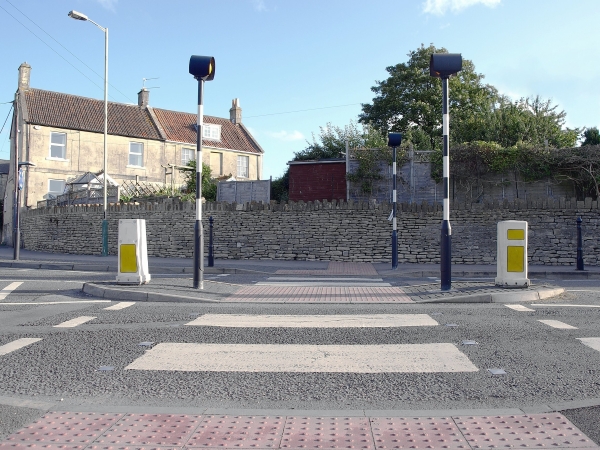
“In an increasingly technological and AI-led world, there is something reassuring about the simplicity of the zebra crossing. No app, no screen, no complicated technology – just instantly recognisable stripes, flashing Belisha beacons and a clear responsibility on drivers to look out for pedestrians.
“One of its strengths is that it encourages eye contact between drivers and pedestrians. That often results in a very human acknowledgement – a nod, smile or wave of thanks – which is increasingly rare in our technological world.
“The zebra crossing has become part of the fabric of British life. Generations of children have grown up knowing the name, while the Beatles immortalised one on the cover of Abbey Road, which still attracts visitors from around the world.
“But familiarity must never lead to complacency. A pedestrian crossing should be a place of safety, not a leap of faith.
“After 75 years, perhaps the greatest tribute we can pay the zebra crossing is that its simple principle still works: see, be seen and give way.”
AA Driving School: spot the crossing early and be ready to stop
Mark Born, Head of Instructor Training and Academy at AA Driving School, said: “Zebra crossings may have been around for 75 years, but they can still catch learners out on their driving test and even beyond the test.
“The key is to spot the crossing early and read what is happening around it. Safely reduce your speed on approach, check the pavements and look carefully for anyone waiting to cross. Don’t leave the decision until the last second.
“Drivers should give way to pedestrians waiting to cross and must give way once a pedestrian has moved onto the crossing. You also need to give people enough time to cross safely, rather than edging forward or rushing them.
“For learners, good observation and planning are crucial. Approaching a crossing too quickly, failing to stop when you need to or stopping on the crossing itself can put pedestrians at risk. These are unsafe driving behaviours, and that is why they can also result in faults on your driving test.
“Cars have changed enormously over the past 75 years, with more technology than ever to support drivers, but the responsibility at a zebra crossing remains with the person behind the wheel. Whether you’re a learner or an experienced driver, the principle is the same: spot the crossing early, look out for pedestrians and be ready to slow down or stop.”
AA Driving School’s five tips for tackling zebra crossings
- Spot the stripes early
Look well ahead for the black-and-white markings and Belisha beacons. Check the pavements as well as the road so you can identify anyone who may be waiting to cross. - Ease off the speed
Don’t race towards a crossing and brake at the last moment. Approaching a pedestrian crossing too fast is a common driving-test fault. - Know who has priority
The Highway Code says drivers should give way to pedestrians waiting to cross a zebra crossing and must give way once a pedestrian has moved onto it. - Don’t wave pedestrians across
It might seem polite, but don’t beckon, flash your lights or sound your horn to invite someone to cross. Other road users may not have seen them and could still be approaching. - Give pedestrians time
Don’t become impatient, rev the engine or edge forwards while someone is crossing. Moving off before a pedestrian has completely cleared the crossing can result in a driving-test fault.
75 years of the zebra crossing
Zebra crossings were introduced in Britain in 1951, with their distinctive stripes making pedestrian crossing points much more visible to motorists.
The flashing amber Belisha beacon – named after former Transport Minister Leslie Hore-Belisha – became another instantly recognisable feature of British roads.
Later innovations included pelican and puffin crossings, which brought traffic signals and, in the case of puffin crossings, pedestrian-detection technology. However, the zebra’s basic design and purpose have remained remarkably consistent.
The Highway Code now says drivers should give way to pedestrians waiting to cross a zebra crossing and must give way once pedestrians have moved onto the crossing.