Private EV ownership rises 45% in a year as UK drivers continue the switch to electric
-
Private EV ownership across the UK has risen by 45.8% in a year – over three-quarters of a million privately owned EVs
-
Wales recorded the fastest national growth, up 53.7%, while the North West saw the biggest regional rise in England, up 58.8%
-
“More EVs on driveways is good news, but the growth in ownership needs to be matched by growth in confidence” – AA President
Private electric vehicle ownership across the UK has risen by 45.8% in a year, according to new AA analysis of quarterly DVLA figures*.
The number of privately owned EVs on UK roads increased from 533,039 in Q4 2024 to 777,198 in Q4 2025, a rise of 244,159 vehicles.
Growth was recorded across every UK nation. Wales saw the fastest increase, up 53.7%, from 18,811 to 28,917 privately owned EVs. England rose by 45.4%, from 461,862 to 671,883, while Scotland increased by 45.7%, from 44,848 to 65,340. Northern Ireland rose by 44.9%, from 7,330 to 10,614.
UK Headline figures
| Area | Q4 2024 | Q4 2025 | Change |
| UK | 777,198 | 533,039 | +45.8% |
| England | 671,883 | 461,862 | +45.4% |
| Wales | 28,917 | 18,811 | +53.7% |
| Scotland | 65,340 | 44,848 | +45.7% |
| Northern Ireland | 10,614 | 7,330 | +44.9% |
Within England, the fastest regional growth was recorded in the North West, where private EV ownership rose by 58.8%, from 50,592 to 80,365 vehicles. This was followed by the East Midlands, up 58.1%, from 39,612 to 62,607, and Yorkshire and the Humber, up 57%, from 37,651 to 59,095.
The South East remains the English region with the highest number of privately owned EVs, with 139,578 vehicles in Q4 2025, up from 99,979 a year earlier. London had 84,480 privately owned EVs, up from 67,926, but saw the slowest percentage growth among English regions at 24.4%.
“More EVs on driveways is good news, but the growth in ownership needs to be matched by growth in confidence”
The figures suggest private EV growth is now strongest in regions where ownership has historically been lower. The North West, Yorkshire and the Humber, East Midlands, North East and West Midlands all recorded growth above 55%, indicating that adoption is broadening beyond some of the more established EV markets.
However, the data also shows the transition is moving at different speeds. London remains one of the largest private EV markets by volume but recorded the slowest percentage growth of any English region. This slower rise may partly reflect the capital’s position as an early adopter of EVs, meaning growth is now being measured against a more established ownership base.
The South East, which has the highest number of privately owned EVs in England, also grew at a slower rate than the UK average, up 39.6%.
English regional breakdown
| Area | Q4 2024 | Q4 2025 | Change |
| North East | 27,494 | 17,580 | +56.4% |
| North West | 80,365 | 50,592 | +58.8% |
| Yorkshire/Humber | 59,095 | 37,651 | +57% |
| East Midlands | 62,607 | 39,612 | +58.1% |
| West Midlands | 63,471 | 40,552 | +56.5% |
| Eastern England | 84,632 | 58,823 | +43.9% |
| London | 84,480 | 67,926 | +24.4% |
| South East | 139,578 | 99,979 | +39.6% |
| South West | 70,161 | 49,147 | +42.3% |
Local authority areas also showed wide variation. The biggest local increases included Hull, up 86.6%, Knowsley, up 86.7%, Boston (Lincs), up 79.9%, Gwent, up 87.9%, and Middlesbrough, up 78.4%.
By contrast, the slowest rises listed in the figures included Kensington & Chelsea, up 3.7%, Orkney Islands, up 20.6%, Elmbridge (Surrey), up 24.7%, Hertsmere (Hertfordshire), up 24.3%, and Cotswold, up 34%.
More EV Searches
The ownership figures come as separate AA Cars analysis suggests more drivers are actively considering electric vehicles. Views of second-hand EVs on AA Cars rose by more than 43% between the week commencing 2 March and the week commencing 6 April, against a backdrop of rising fuel prices and growing interest in lower day-to-day running costs.
AA EV Readiness Index
The AA’s latest EV Readiness Index, published in March 2026, shows that conditions for switching to electric are improving, with the overall readiness score rising from 48.8 in Q4 2025 to 53.8 in Q1 2026. The Index found that falling used EV prices had helped shift the dial, with used electric cars 10% cheaper than comparable petrol cars during the quarter.
However, the Index also highlighted that the transition remains fragile. AA member polling found only 3% of drivers felt confident buying a used EV, while just 22% felt confident they would know how to charge one. In April, there were 119,080** public chargers across the UK, around 39.7% of the Government’s 2030 target of 300,000.
AA member polling also found that only 3% of drivers felt confident buying a used EV, while just 22% felt confident they would know how to charge one.
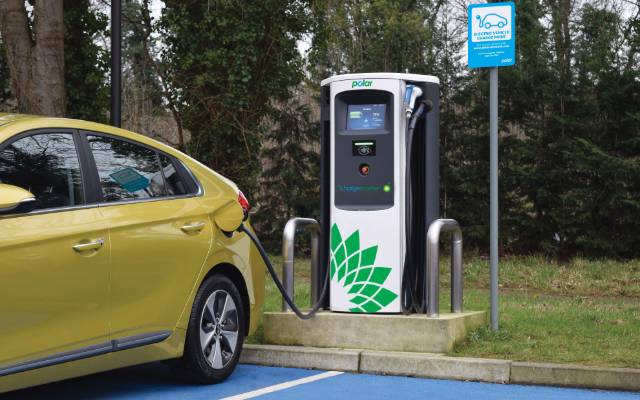
Edmund King, AA President, said: “Private EV ownership continues to accelerate, with more than 244,000 additional electric cars registered to private owners compared with the same period last year. The figures show that the move to electric is gathering pace across every nation of the UK, with the total rising from 533,000 to more than three-quarters of a million (777,198) in 12 months.
“What is encouraging is that the strongest growth is now being seen outside some of the more established EV areas. This suggests the switch to electric is broadening across the country and these figures are even more compelling as they relate to private sales rather than fleet or company sales that might be influenced by further tax incentives.
“London’s slower percentage growth may reflect the fact that the capital was earlier to embrace electric vehicles, so it is now growing from a more mature base. Even so, London still added over 16,000 privately owned EVs in a year, while the South East added nearly 40,000, showing that growth continues in areas where EV ownership is already comparatively high.
“Our latest EV Readiness Index shows conditions for switching are improving, helped by falling used EV prices, but the transition remains fragile. The next stage of EV adoption will depend on drivers feeling confident that charging is reliable, easy to use and fairly priced, and that they have the information they need to make the switch.”
“More EVs on driveways is good news, but the growth in ownership needs to be matched by growth in confidence.”
* DfT/DVLA table VEH0142, using Cars / Battery Electric / Private keepership / 2025 Q4 vs 2024 Q4.
** Developing faster indicators of transport activity - GOV.UK