Nearly 30 years after passing my test, I tried Driver Confidence

I passed my driving test in January 1997. Fourth time lucky!
Why then after 30 years behind the wheel was I nervous, in fact very nervous, that someone was going to professionally assess my driving again?
I've obviously had passengers pass comment, and my partner isn't shy about offering the occasional observation, but my biggest critic might actually be my car.
After every journey it quietly assesses how I've driven. It looks at things like my acceleration, braking and speed, then gives me a score and a few ‘helpful’ tips on how I could improve.
There is something slightly unnerving about finishing an entirely ordinary journey, turning the car off and having it score me. Sometimes the score is flattering. Sometimes it isn't.
Until now, the judge has been my dashboard.
Three decades on some skills still need work
I feel like I should admit something else. Parking and reversing have been my nemesis for years.
After I finally passed my test, I lived at the bottom of a hill, so parallel parking wasn't going to happen. I then spent years living at a succession of houses where I had a driveway or a parking space, which meant I didn't really need to think about parking.
And, if I'm honest, I became lazy.
I got into the habit of choosing the easy option whenever I could, rather than making myself better at the manoeuvres I wasn't particularly confident with.
Even with all the technology available in modern cars, including reversing cameras and parking sensors, I still seek the lazy option.
Why practise getting better at something when the car will happily show me what's behind me and warn me when I'm getting too close?
The problem, of course, is that technology can help you park, but it can't necessarily make you a better parker.
How a minor collision affected my driving confidence
Then came June.
I had a minor bump in the car park at work, reversing into another car. Nobody was hurt, but it was a good reminder that being an experienced driver and being competent at every aspect of driving aren't necessarily the same thing.
Because I'm insured with The AA, I was offered a two-hour Driver Confidence session afterwards.
I accepted.
As the date got closer, I found myself wondering what on earth I had let myself in for.
The last professional driving assessment was when I finally passed my test, I've driven thousands of miles since and developed plenty of habits, I suspect, some my original instructor wouldn’t be proud of.
What would an instructor make of me now?
Would they spot things I didn't even realise I was doing? Would 30 years of driving experience work in my favour? Were some of my habits a ticking timebomb?
Perhaps most importantly, would I pass my own driving test this time?
I started changing my driving before the refresher lesson
After booking it, something strange started happening
I found myself driving differently.
Hands at 10 and 2.
Checking my mirrors more.
Leaving more distance between me and the vehicle in front.
Road positioning, speed, the lot.
The funny thing was, the lesson hadn't even happened yet.
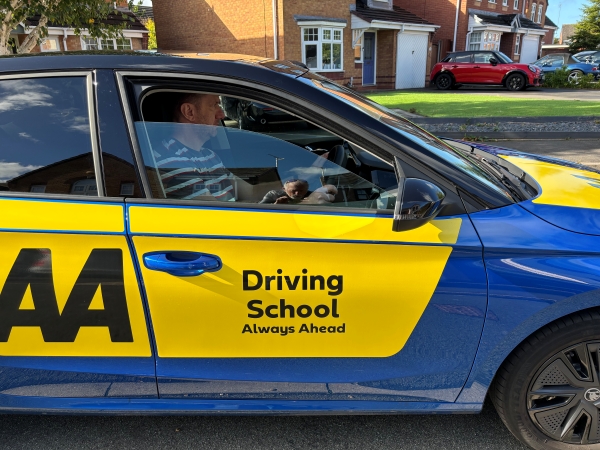
What happens on a Driver Confidence refresher lesson?
I started to feel nervous in the days leading up to the lesson than I was on the morning itself.
I'd found myself explaining to people where I was going to be for two hours yet I felt the need to explain that I wasn't learning to drive again.
This was about refreshing my skills and looking at the way I drive now compared to all those years ago.
At 10am, my instructor, Ian Stinchcombe, arrived.
After explaining why, I was there and what I wanted from the session, Ian understood my apprehension straight away.
He could tell I was apprehensive but reassured me that I was far from unusual. He'd taught plenty of experienced drivers wanting to refresh their skills.
Then it was time to actually drive.
Getting used to having a driving instructor beside me again
The first half an hour probably felt the strangest.
Apart from getting used to a different car, I was also having a professional driving instructor sitting in the passenger seat watching everything I was doing.
We started on familiar local roads, which helped. As the conversation started flowing, I gradually relaxed.
We talked about Ian's career and how he'd become a driving instructor in the first place.
Before teaching people to drive, he'd worked on the railways, where he'd become the person colleagues would often turn to when someone needed training.
He realised that he enjoyed teaching people, and becoming a driving instructor gave him the opportunity to combine that with another of his interests: cars.
Ian has been a driving instructor since the early 2000s and recently returned to The AA because he wanted to teach in an automatic. He's also a genuine motoring enthusiast.
Having taught for more than two decades, Ian has also watched both cars and the driving test change considerably.
We talked about some of those changes: the technology that is now commonplace in cars, whether features designed to make driving easier risk making us (and me!) a little too reliant on them, and how the driving test has evolved since I took mine in 1997.
We also talked about the changes to the driving test during his career, including the things he thinks have improved the way new drivers are prepared for the road and some of the changes he is less convinced about.
It stopped feeling like an assessment and became a conversation about driving.
And somewhere during that conversation, I stopped thinking quite so much about the man sitting next to me assessing my driving and started simply driving.
I almost forgot he was judging me.
Once I'd settled in, Ian began guiding me onto roads and through areas I hadn't driven around for many years.
By then, the nerves I'd had before the session had largely disappeared.
Perhaps all that subconscious preparation beforehand had made a difference too. I'd already started thinking more carefully about my mirrors, following distance and what I was doing behind the wheel before Ian had even arrived.
Maybe I'd adjusted my driving without really noticing.
What did the driving instructor think of my driving?
Two hours later, we arrived back and it was time for the bit I'd been wondering about since the session was booked.
The verdict.
"Good driver."
I wasn't expecting that.
Ian said he could tell I'd been nervous when we started, but after about half an hour he'd noticed that I'd settled down. I'd stopped worrying quite so much about having a driving instructor sitting beside me and started driving more naturally.
In other words, he'd actually had plenty of time to see how I normally drive, rather than just the slightly nervous version of me trying desperately to remember everything I'd been taught in 1997.
There were things to work on. He'd spotted a couple of places where I hadn't indicated when I should have.
But considering I'd spent the previous few weeks wondering how many bad habits he might uncover after almost three decades of driving, his overall assessment came as something of a relief.
Then I admitted something else. I'd spent part of the lesson expecting him to reach for the dual controls. Ian told me he hadn't thought about using them once.
That might have been my biggest surprise of the whole two hours.
After all the nerves, all the thoughts about the habits I'd accumulated over nearly 30 years and all those journeys with my car quietly marking my acceleration, braking and constant speed, the professional sitting next to me thought I was a good driver and hadn't once considered intervening.
That was probably the biggest confidence boost he could have given me.
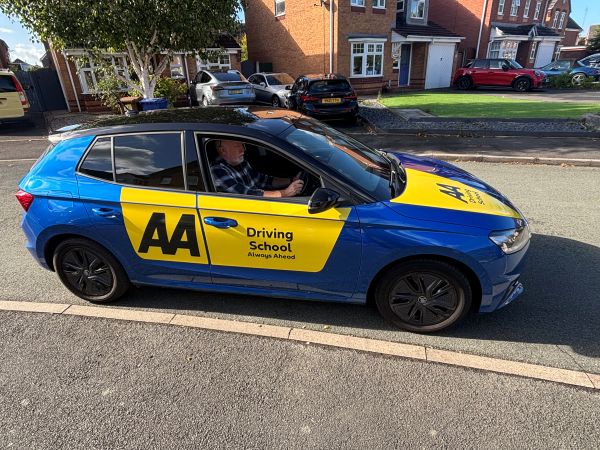
When should experienced drivers consider a refresher lesson?
Before we finished, I asked Ian a question I'd been thinking about since the session was booked.
Should more experienced drivers consider having a refresher lesson?
His answer wasn't that everyone should automatically have one after a certain number of years.
Instead, he felt there were particular circumstances where spending some time with an instructor could be useful.
That might be if a collision has affected someone's confidence, as they get older, or if they are returning to the road after not driving for a while.
That made sense to me.
My own session had come about because of a collision. I'd gone into it apprehensive about having my driving scrutinised for the first time in almost 30 years and half-expecting Ian to uncover a catalogue of bad habits.
I came away feeling rather different.
Did the refresher driving lesson improve my confidence?
There are things I can improve. I'll certainly be thinking more about those occasions when an indicator is needed. And parking and reversing haven't suddenly stopped being my nemesis. I suspect there is still some work for me to do there.
But I also came away with something I hadn't necessarily expected from a driving lesson: reassurance.
The instructor sitting next to me hadn't needed his dual controls. He thought I was a good driver.
And after almost 30 years without any professional feedback on my driving, it was surprisingly nice to hear that.
Perhaps the biggest lesson was that a refresher doesn't have to be something you do because you're a bad driver.
It might simply help you become a more thoughtful and confident one.
Although I'm fairly certain my car will continue marking me after every journey.