The AA warns drivers as thundery downpours follow hot weather

-
Drivers warned to expect sudden surface water and localised flooding as heavy, thundery showers follow the recent hot, dry weather
-
Hard, compacted ground following prolonged dry conditions can increase surface run-off during intense rainfall
-
“Conditions can change incredibly quickly when a thundery downpour hits.” – AA expert patrol
The AA is urging drivers to prepare for rapidly changing road conditions as heavy and thundery showers follow the recent spell of hot and dry weather.
Thunderstorms are expected to become more widespread over the coming days, with some heavy and slow-moving downpours bringing the risk of hail, lightning and localised flooding.
After a prolonged period of hot and dry weather, drought conditions have left ground in many areas hard and compacted. This can make it more water repellent, meaning intense rainfall can fall faster than it can soak into the ground. Instead, water can run rapidly across the surface, increasing the risk of flash flooding.
For drivers, this means roads that have been dry for prolonged periods could develop significant surface water in a short space of time. Heavy rain can also reduce visibility, while standing water increases the risk of aquaplaning and can conceal potholes and other hazards.
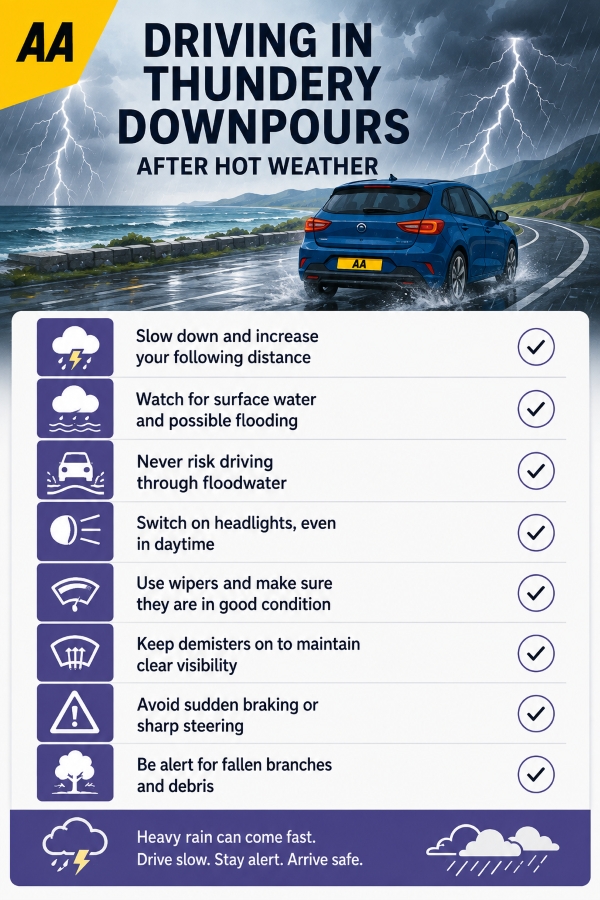
Lee Morley, AA Expert Patrol, said: “Conditions can change incredibly quickly when a thundery downpour hits. After such a long spell of hot and dry weather, drivers may not be expecting roads to suddenly become covered in surface water or even flooded, so they need to be ready to adapt quickly.
“Slow down, increase the distance between you and the vehicle ahead and avoid sudden braking or sharp steering. Keep looking well ahead for surface water and be particularly cautious where water is beginning to collect. Heavy rain and spray can also seriously reduce visibility, so make sure your lights, wipers and demisters are being used when needed.
“Most importantly, never take a chance with floodwater. If water looks too deep or is moving, turn around and find another route. You cannot always tell how deep it is from behind the wheel, and there could be damage or other hazards hidden underneath. A short delay or diversion is always preferable to putting yourself, your passengers or your vehicle at risk.”
The AA's advice for driving in thundery downpours
- Slow down and increase your following distance. Stopping distances are longer on wet roads, so give yourself more time and space to react.
- Watch for surface water and possible flooding. Conditions can change quickly during intense rainfall, particularly in dips, low-lying areas and under bridges.
- Never drive into moving floodwater or water more than 10cm deep. If the road ahead is flooded and you are unsure of the depth, turn around and find another route.
- Use your lights in poor visibility. Heavy rain and spray can make it difficult to see and be seen.
- Keep your windscreen clear. Check that your wipers work effectively and use your demisters when necessary.
- Avoid sudden braking or sharp steering. Smooth inputs help maintain grip on wet roads.
- If you aquaplane, ease off the accelerator and slow down gradually until the tyres regain grip.
- Be alert for debris. Heavy weather can leave branches and other obstructions on the road.