Driving in Europe
General advice for motoring in Europe
Your documents
You may be asked to produce your documents at any time. To avoid a police fine and/or confiscation of your vehicle, be sure that they are in order and readily available for inspection.
Documents you should take with you
- A valid full driving licence (not provisional), with paper counterpart if you have a photocard licence
- An International Driving Permit when necessary
- The original vehicle registration document
- Your motor insurance certificate
- Your passport
You may need a visa for certain countries too.
It is your responsibility to ensure that you have all documentation needed to comply with the requirements of immigration, customs, health and other relevant regulations.
If you're travelling in a vehicle other than a motor car or motorcycle or taking a boat, make sure you have any additional documentation that may be required.
Borrowed, hired or leased
When taking a vehicle abroad that is company owned, hired or borrowed the best course of action is to try to obtain the original V5 registration document together with a letter of authorisation from the owner.
If you can't get hold of the V5 then we would recommend that you obtain a document called a Vehicle on Hire Certificate also known as the VE103b.
This document is available from BVRLA/All fleet services on 01452 887686 and is the only legal alternative to the vehicle registration document.
The Vehicle on Hire certificate must be carried in addition to a letter of authorisation from the registered keeper.
Your passengers and you
Breakdown cover
Make sure that you have adequate cover. AA European Breakdown Cover provides cover for many European countries.
Emergency contact
112 is a European emergency call number you can dial in the 27 Member States of the European Union in case of accident, assault or in any other distress situation.
Car crime
Never leave handbags and other attractive items in obvious view even when you are in the car, and never leave anything in an unattended car.
For advice on car crime or personal safety in specific countries, contact the Foreign Office Travel Advice Unit on 0845 850 2829 or visit the Foreign Office web site at
www.fco.gov.uk/en/travelling-and-living-overseas/travel-advice-by-country/ .
Drinking and driving
There is only one safe rule – if you drink, don't drive. Laws are strict and the penalties are severe.
Insurance
Contact your insurer for advice at least a month before taking a vehicle overseas. Ensure that you're adequately covered and have the necessary documents to prove it.
Medical treatment
Generally you can get urgent medical treatment at reduced cost, from the health-care schemes of those countries with which the UK has health-care arrangements. You'll find details in the Department of Health booklet 'Health Advice for Travellers', available from any main post office. Don't rely exclusively on these arrangements, as the cover provided under the respective national schemes is not always comprehensive – and the cost of bringing a person back to the UK in the event of illness or death is never covered. Make sure you have adequate travel insurance.
112 is a European emergency call number you can dial in the 27 Member States of the European Union in case of accident, assault or in any other distress situation.
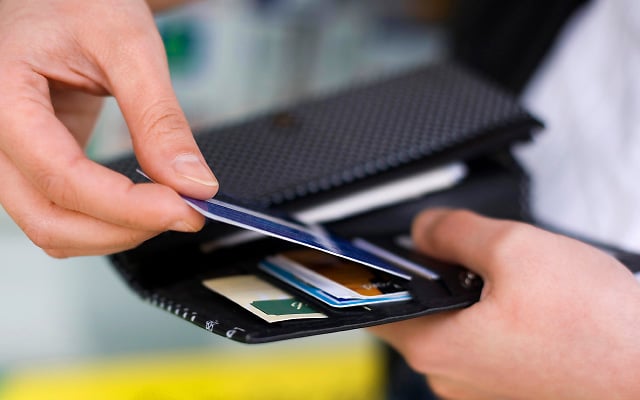
Credit Cards
Occasionally we hear reports of UK issued credit cards not being accepted at stores or petrol stations in other countries.
If you're going to rely on a particular credit card whilst away we recommend checking with the card company to confirm that it can be used in the country you're visiting.
Mobile phones
The use of hand-held mobile phones while driving is prohibited in many countries.
Pets
Contact the PETS Helpline on 0870 241 1710 or visit the PETS website at www.defra.gov.uk/animalh/quarantine/pets/index.htm.
Show your card
If you're a Personal AA member your AA membership card includes the 'show your card' symbol on the reverse - this gives you access to hundreds of discounts in Europe and the USA.
In most cases you simply show your AA membership card to get the discount. For more information visit ARC Europe
Spectacles
Take a spare pair of spectacles if you wear them – especially if you are the sole driver.
Think right
It's easy to forget to drive on the right, particularly after doing something familiar, such as leaving a petrol station or car park.
Your car
Child restraints
Never fit a rear-facing child restraint in a seat with a front airbag. Find out more about child safety in cars.
GB sticker
Compulsory, and failure to comply could result in an on-the-spot fine.
Euro-plates - number plates that include the GB euro-symbol - have been legal since March 2001 and make display of a conventional sticker unnecessary within the EU.
In some countries outside the EU a conventional sticker is required even if you have euro-plates, so it is always safer to display one.
Reflective Jackets
It is now compulsory in many European countries for visiting motorists to carry/wear reflective jackets.
In addition, as they are compulsory for residents in Norway and Portugal we would recommend that they are carried by visitors too.
The AA recommends that each vehicle carries at least two jackets/waistcoats in the passenger compartment - one for the driver and one for a passenger. Our country-by-country advice includes details of specific national requirements - you should check this for the countries you're visiting.
The Jacket/waistcoat must conform to EU Standard BS EN 471: 1994 Class 1 or 2.
If you intend hiring a car in one of the countries that require reflective jackets it's important to be aware that not all suppliers provide reflective jackets as standard with their cars. We advise checking with the hire company concerned before you travel.
Suitable jackets/waistcoats for both adults and children are available from the AA Shop and from The AA Shop: Dover and Eurotunnel (Folkestone).
Headlights
If you're driving to the Continent and using headlights then you must adjust the headlamp beam pattern to suit driving on the right so that the dipped beam doesn't dazzle oncoming drivers.
The legal requirement is to 'not cause dazzle to oncoming drivers' rather than specifically to adjust/convert headlamp beam pattern so if it's only a short trip and you know you won't have to drive with lights on then conversion is not necessary. You can be delayed however or the weather can change suddenly so the AA recommends that you always adapt your headlights or at the very least take the means with you to do so.
Don't leave it to the last minute to check with the dealer or the car's handbook for advice – It might be necessary for a dealer to make an adjustment for you.
Headlamp beam converter kits are widely available but may not all be suitable for all types of headlight – check application lists carefully.
Modern high-intensity discharge (HID), halogen or xenon headlights
Some feature an internal 'shutter' that can be moved into place by a screw or lever adjustment at the back of the headlamp unit, but some designs are less convenient and the dealer will need to make the adjustment for you.
These lights can be adapted by some headlamp beam converter kits too.
The AA Shop sells beam converters suitable for all vehicles – individual fitting diagrams are included for the latest 'Clear Glass', 'Projector' and 'Xenon' headlamps inside the packaging.
Remember to remove the converters as soon as you return to the UK.
Warning Triangle
It is compulsory in many European countries for visiting motorists to carry a warning triangle.
Our country-by-country advice includes details of specific national requirements - you should check this for the countries you're visiting.
To buy travel essentials visit the AA Shop
More information about compulsory equipment for popular European destinations »
Leaded petrol
Leaded petrol is no longer generally available in northern European countries and Lead Replacement Petrol (LRP) is getting more difficult to find. If LRP is not on sale, an anti-wear additive (for treating unleaded petrol) can be bought from the filling station shop.
Overloading
Don't overload the car as, safety risks apart, this can incur fines and possibly invalidate insurance.
Booze cruises
We're called out regularly, especially around Christmas, as overloaded cars break down on their return from the Continent. Remember, carrying five cases of wine is equivalent to having another passenger in the car. If you overload your car you could pay more in repair bills than you saved on your shopping. Overloading can cause the following problems:
- damage suspension
- burn out the clutch
- cause punctures or uneven wear on tyres
If you are planning a booze cruise, take the stress out of breaking down abroad with European Breakdown Cover – ideal for short trips to the Continent.
Rear-view mirrors
If your vehicle is not equipped with a door or wing-mirror on the left-hand side we recommend that you get one fitted to aid driving on the right.
Servicing
Service your car well in advance to reduce the chance of expensive breakdowns when abroad.
Speed-trap detection devices
The use or possession of devices to detect police radar is illegal in most European countries. Penalties can include fine, driving ban, and even imprisonment.
Some countries now also prohibit the use of GPS based navigation systems which have maps indicating the location of fixed speed cameras meaning that you must deactivate the 'fixed speed camera PoI (Points of Interest)' function.
Tyres
Like the UK, most countries require a minimum tread depth of 1.6mm over the central three-quarters of the tread and around the whole circumference.
We recommend a minimum of 2mm but consider changing tyres if the tread is down to 3mm before you go. Tyres wear out quickly after they get down to 3mm.
Wheel chains
Important for any winter motoring and compulsory in some countries even when using winter tyres.
Snow Chains are available from the AA's Dover and Folkestone shops - the Folkestone shop is beyond the customs point.
Customers must ring first to check availability and will be asked for the vehicle Make & Model and the tyre size read from the sidewall of the tyre.
AA members get a 5% discount.
AA Port Shop Free phone Number:
Why not take advantage of our free phone contact number at Eurotunnel by calling ahead to pre- order your car essentials!
Folkestone: 0800 072 4372
Other products & services
Related information
27 October 2009